 Paths & Paws
Most people assume paw prints are no different than boot prints. They are not. An excited dog actually causes significantly more soil compaction and vegetation damage than a hiker just walking the path. When we first started pushing up into the high Cascades with our 50-pound Lab mix, Scout, we assumed she belonged everywhere we went. We had no idea about the permanent damage she might cause. We were wrong.
The alpine tundra is painfully sensitive to outside influence. The tree line acts as a hard border between the resilient forest below and the highly vulnerable ecosystem above, sitting around 5,000 feet in the Pacific Northwest and closer to 11,000 feet in Colorado. The rules of survival just completely change once the trees stop growing. Plants up there survive brutal winters with a growing season lasting just a few weeks, and these ecosystems need decades to recover from a single season of heavy trampling.
We looked at the environmental impact data and analyzed soil chemistry changes along with wildlife displacement patterns to see what actually happens when dogs enter the high alpine. The data is pretty sobering. We have to factor these impacts into our route planning.
Key Takeaways
- 1A running dog causes far more soil compaction and root damage than a hiker's flat boot step, especially on steep grades
- 2Dog urine spikes soil nitrogen enough to burn alpine plants and alter pH, giving invasive weeds a foothold
- 3The mere scent of a dog forces pikas and marmots to abandon foraging during their short pre-winter window
- 4National Parks almost universally ban dogs from unpaved alpine trails, while National Forests may allow leashed access
The Real Damage to Fragile Ecosystems
Mechanical Trampling and Soil Compaction
The alpine tundra already exists in a state of extreme stress. Plants hug the ground just to survive the freezing winds and they develop very shallow root systems in the thin rocky dirt. These specialized plants rely on those delicate structures to weather extreme temperatures. A single dog running off the trail destroys decades of hard-fought growth in seconds.
Think about the mechanics of it. Four paws digging in for traction absolutely shred the shallow roots of moss campion and alpine avens. A moss campion plant might take ten full years to reach the size of a dinner plate, yet one scrambling dog rips that progress out by the roots instantly. We step flat with a heavy boot. A dog tears into the earth when they accelerate or turn sharply.
We noticed this exact thing with Scout on our early trips into the Mount Baker Wilderness. Even at just 50 pounds her paws kick up a massive amount of dirt when she gets excited on a steep grade. We now keep her strictly on the center of the path. When dogs step off the trail they also compact the dirt. Hardened soil repels rainwater, accelerating erosion and washing away the very little topsoil that still exists above the tree line.
The Chemical Impact of Dog Waste
Poop and pee introduce a completely different problem. Our dogs are dumping excess nutrients into an environment that evolved to survive on almost none. A 2020 study in Frontiers in Ecology and Evolution found that dog urine acts like a nitrogen bomb on soil, with researchers observing acute chemical changes that persisted long after the liquid dried.
Alpine plants simply cannot handle that kind of nitrogen spike. The concentrated urine burns their leaves and alters the soil pH enough to give invasive weeds a foothold to take over the native flora. Solid waste is equally destructive. Because these high environments experience freezing temperatures and incredibly low bacterial activity, dog feces will just sit there for months without breaking down until the pathogens inside eventually wash right into the local watershed during the spring snowmelt.
Wildlife Displacement and Stress
Our pets also displace the native wildlife. High altitude animals like pikas and marmots view dogs as apex predators, and the mere scent of a canine is enough to make these prey animals completely abandon their primary foraging areas when they should be eating. They only have a few short weeks to gather food for winter hibernation. Every minute they spend hiding from our dogs is a minute they lose preparing for winter.
When a pika smells a dog its stress hormones spike immediately. They panic. This biological reaction forces the little animal to burn precious calories while hiding deep in the rocks. Even when we keep Scout on a tight leash, her high prey drive makes the local marmots sound their piercing warning calls across the whole basin. Her scent lingers long after we hike back down to the car, keeping the wildlife on high alert and away from their critical food sources for hours.
Understanding The Rules (Where and Why)
Land managers restrict access for a reason. You will run into firm rules in almost all of these environments. National Parks universally ban dogs from unpaved trails. Places like Rocky Mountain National Park and Mount Rainier prohibit dogs on all backcountry routes simply because their massive visitor numbers would absolutely destroy the delicate habitat if pets were allowed to roam freely.
The ecosystems just can't handle the pressure. National Forests operate differently and some do allow leashed dogs. But we never mistake permissive rules for a lack of impact, as the physical damage happens regardless of the legal designation. The Forest Service just balances public recreation and wilderness conservation differently than the Park Service. Bureau of Land Management areas often have the fewest restrictions while still requiring us to maintain control over our animals.
We always search for the exact trail name on the managing agency website before driving out to the trailhead, and we keep a physical map in the car with dog-friendly boundaries highlighted in marker. It ruins an entire weekend to hike three miles up a steep grade just to hit a no dogs sign at the wilderness boundary. Fines for ignoring these signs and bringing dogs into prohibited alpine zones can run into the hundreds of dollars, with park rangers aggressively enforcing these borders to protect the tundra from permanent scarring.
How to Minimize Environmental Impact
If we choose a legal high-elevation route we have to take active steps to protect the environment. We must actively manage the dog constantly.
Strict Leash Management
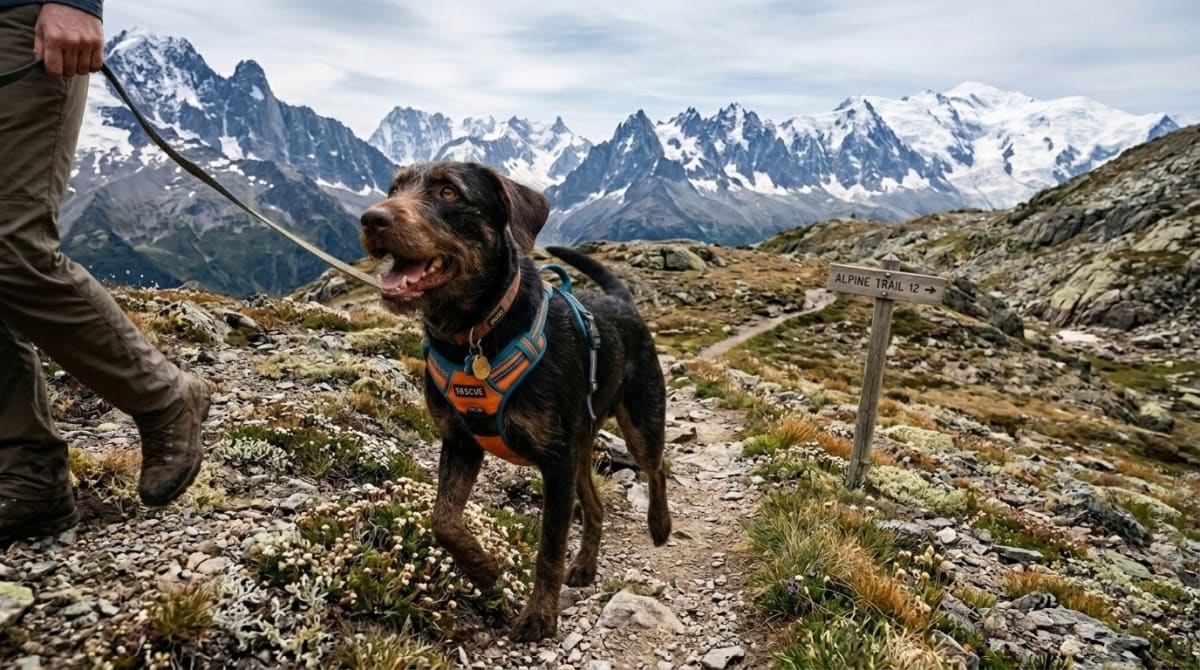
We always start with a short fixed leash. Retractable leashes are completely useless up here. You cannot let a dog wander ten feet off the trail just to sniff an interesting rock. We rely on a standard four-foot leash for Scout in these zones to keep her strictly centered on the established dirt path.
The Passing Protocol
Trail etiquette dictates that we yield to uphill hikers. But if someone approaches we do not step off into the vegetation to make room. We look for a durable surface like a large flat rock. We spent weeks teaching Scout a dedicated command to jump up and wait patiently on these boulders so that passing traffic can move by us without anyone accidentally crushing the vulnerable plant life lining the path. You really need to train this behavior in your living room before attempting it on a narrow ridge with a steep drop.
Zero-Trace Waste Removal
We pack out every bit of waste. Burying dog feces is never an option in the alpine zone. The dirt is way too thin and the temperatures are too cold for the waste to break down naturally. The bacteria will inevitably contaminate the nearby water runoff during the next storm. We carry a dedicated dry bag for Scout's poop bags and clip it securely to the outside of her harness so she can carry her own waste until we finally reach a proper trash can at the trailhead. Never leave a plastic waste bag sitting on the side of the trail with loose plans to grab it on the way back down.
Protecting Alpine Water
We also keep our dogs completely out of alpine lakes and streams. These high water sources are pristine but fragile. Dogs carry topical flea medications and tick treatments on their coats, and these strong chemical treatments wash off into the water almost instantly to kill sensitive aquatic insects and amphibians. We always pack a collapsible bowl. We pull water from the stream and bring it back up to the dry trail for Scout to drink. She never actually steps foot in the water source.
When You Should Just Leave Them Home
Some routes just do not mix with dogs. We have to make tough ethical calls sometimes. A permissive pet policy doesn't automatically mean our dogs actually belong on that specific trail.
Crowds and Narrow Trails
Crowded paths are a major red flag for us. If we have to step off the trail constantly to let large groups pass by, alpine plants are going to get crushed. Narrow ridge lines present the exact same problem since they offer zero room to step aside safely without damaging the soft green edges of the path. If we plan to hike a highly popular alpine route on a busy summer weekend, we just leave Scout at home.
Harsh Terrain and Exposure
Long stretches of sharp talus rock are usually miserable for dogs. The jagged edges tear up their paw pads quickly, and dogs naturally lack the spatial awareness required to navigate miles of loose boulders safely. We left Scout home when we hiked the Sahale Arm up in the Cascades. The terrain was just too rocky and the wildlife was too abundant. She stayed happily on the couch. We got to enjoy the sweeping glacier views without spending our entire afternoon stressing about her paw pad safety, and we avoided terrifying the local marmot population while actively protecting the exact environment we hiked up to appreciate.
Weather Extremes
Alpine zones completely lack shade. The ultraviolet exposure up there is intense. Granite and dirt paths heat up surprisingly fast under direct sunlight to burn sensitive paw pads. Sudden afternoon thunderstorms are also incredibly common above the tree line, and lightning strikes pose a severe threat when you and your dog are the tallest objects standing on an exposed ridge.
We always evaluate obedience levels honestly. If a dog pulls heavily on the leash they will eventually drag their handler off the trail. If they lunge at small animals they will terrify the local wildlife.
Frequently Asked Questions
Filed under
Sarah is learning to hike with dogs alongside her readers. Scout is her first trail companion, and she shares every mistake, success, and lesson learned along the way.
References & Further Reading
- Dog Urine Has Acute Impacts on Soil Chemistry in Urban Greenspaces — Frontiers in Ecology and Evolution (2020)