 Paths & Paws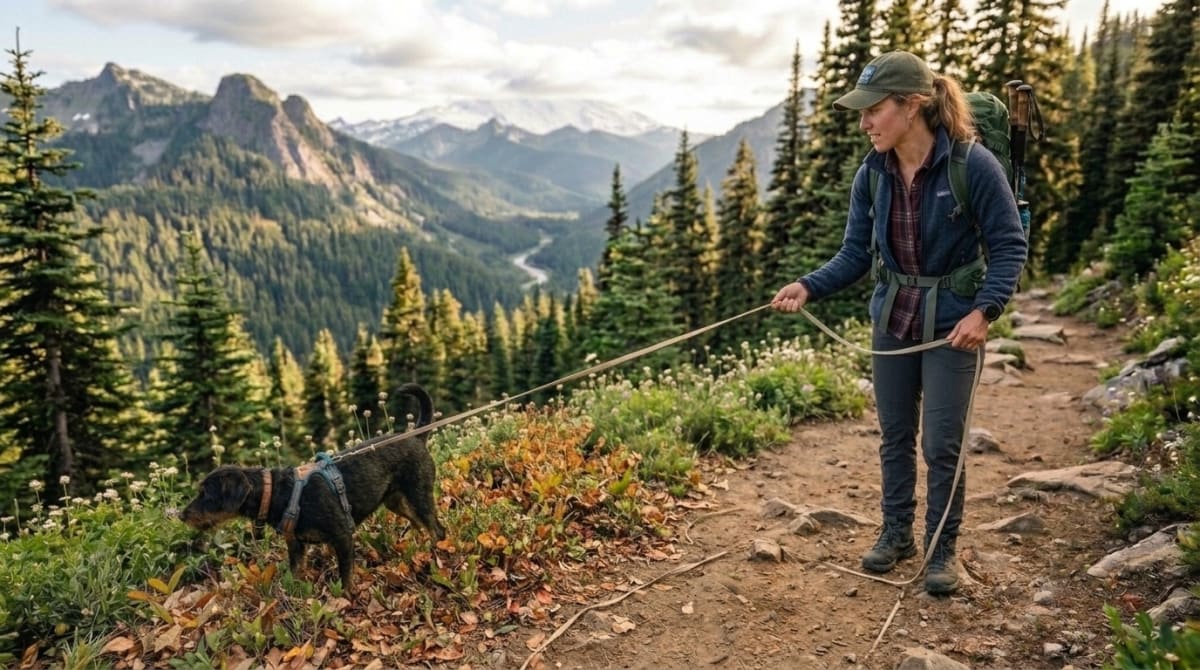
Most hikers expect instant freedom from a long line. They are usually wrong. Skip the active management and handlers end up with rope burn, muddy hands, broken hardware, and tangled legs. We learned this the hard way on Mount Si. Scout is our 50-pound Lab mix rescue. She hit the end of a 20-foot cotton line chasing a squirrel and nearly pulled me into a ravine. A long line bridges the gap between strict leash laws and a dog needing space to sniff, but it demands attention. Handlers cannot just clip the hardware and check out. Whoever holds the leash must reel the slack continuously. That reeling prevents the dog from tripping other hikers or clotheslining themselves on trailside brush before they hit the end of the tether at top speed.
Key Takeaways
- 1A long line only works with active slack management, not a clip-and-forget setup
- 2Biothane beats cotton and nylon in wet conditions and resists friction burns
- 3Always clip to a back-attachment harness, never a collar
- 4The accordion fold technique prevents finger injuries and lets the line feed out smoothly
The Essential Gear for Long Line Hiking
Gear choices dictate the experience. Nylon is terrible. Cotton is even worse. We ran several different materials through a wet Pacific Northwest winter. Biothane consistently beat the rest because it sheds water instantly and just glides over jagged rocks without catching or fraying.
When cotton or nylon gets wet the fabric drinks up mud and water. That adds drag. A saturated leash alters the dog's walking mechanics and completely kills that illusion of off-leash freedom. Biothane stays light regardless of the weather. That rubbery finish also stops the severe friction burns associated with wet webbing ripping through bare hands.
Length selection comes down to trail visibility. A 15-foot line hits the sweet spot for actual control during day hikes. Leave the 30-foot lines for open fields. Taking a 30-foot rope onto a densely wooded trail guarantees pure frustration since it snags on exposed roots and weaves around the dog's legs continuously, turning a relaxing walk into a nonstop untangling chore. Fifteen feet provides enough room for sniffing breaks while remaining manageable when we need to reel Scout back fast.
Think about hardware weight. Big brass clips bounce aggressively against the spine at a trot. Stick to small aluminum carabiners or lightweight steel clips. The connection has to hold secure without dumping unnecessary bulk onto the dog's back. Handlers need leather gloves too. An abrupt lunge from a fifty-pound dog yanks the line fast enough to slice skin open. Leather provides the friction required to secure a sudden stop. If you're still deciding on a standard trail leash to pair with the long line for tight sections, our breakdown of the best leash length for single-track covers the tradeoffs.
What You Need for Long Line Hiking
- 15-foot biothane long line
- Back-clip harness with a sturdy webbing loop
- Small aluminum carabiner or lightweight steel clip
- Leather work gloves
Why Back-Clip Harnesses Are Mandatory
Never clip to a collar. The risk is simply too high. Forces escalate fast. When a dog hits the end of a 15-foot line at a full sprint they generate a massive amount of kinetic energy that transfers straight into their neck if they lack a properly fitted back-clip harness.
A 2020 study in Veterinary Record ran tests on simulated canine necks to measure leash pressure. The researchers found that a firm pull of just 40 Newtons on any collar type risks soft tissue injury. A running dog hitting a long tether generates far more force than that. The sudden impact can severely damage the trachea or the cervical spine.
A 2006 study in the Journal of the American Animal Hospital Association pointed out another serious danger. Yanking a collar spikes intraocular pressure. That same study noted that back-clip harnesses do not cause this risky pressure spike inside the eyes.
The harness needs a back attachment point. Front clips ruin the dog's natural gait when they drag a long lead. The slack just drops down between the front legs and creates a constant tripping hazard over rough terrain. Hooking to the back keeps the line elevated safely above the spine so the angle naturally prevents the material from wrapping under the front armpits during a normal walking pace. We run Scout in a Ruffwear Switchbak, which held up fine as a dedicated back-clip point for long line work.
How to Handle the Line (The Accordion Fold)
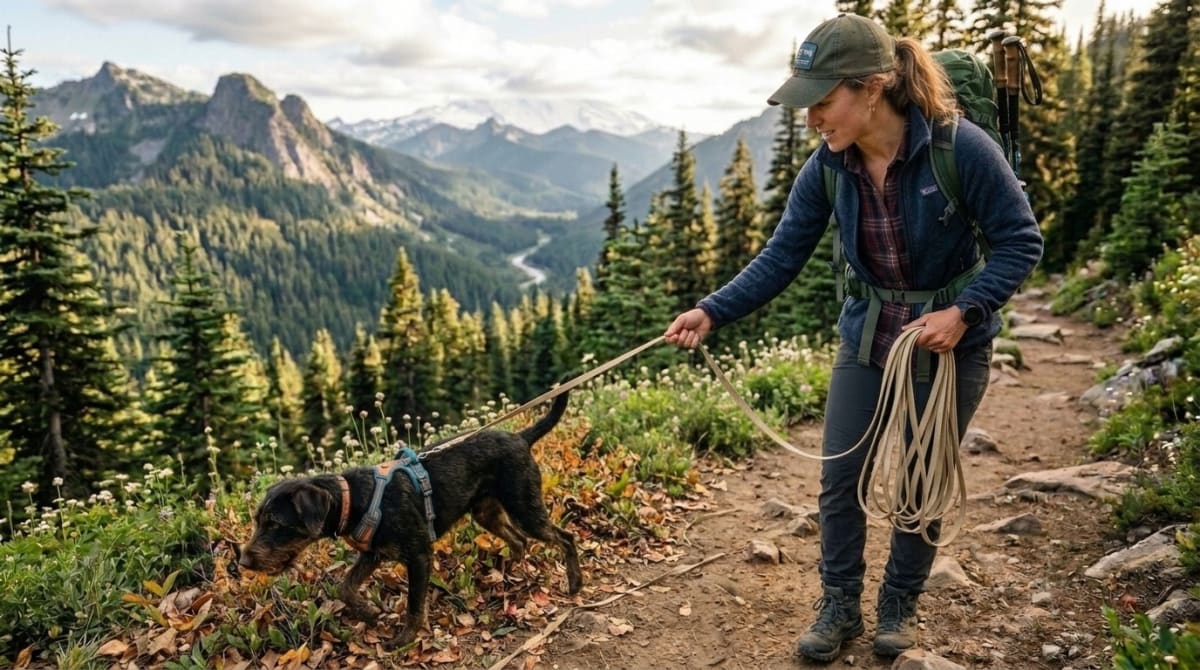
Don't coil the line. Fingers snap that way. The accordion fold technique lets the material sit flat across the palm, which means if the dog abruptly bolts after a chipmunk the tether feeds out smoothly without catching on wrists or thumbs.
Wrapping a leash in loops creates a dangerous trap. If the dog lunges those loops tighten instantly. We see this mistake end in dislocated fingers or nasty rope burn all the time. The accordion fold bypasses this mechanism entirely.
To build the fold, slip the handle over the anchor hand's thumb and close the bottom three fingers over the base of the loop while leaving the index finger and thumb open to catch the slack. Use the free hand to pull slack from the dog and drop the gathered line right into the open palm of the anchor hand. Fold the material back and forth in a flat zigzag pattern. Never wrap it in a circle.
When Scout moves forward we just open the anchor hand slightly. The zigzag folds drop one by one. The line feeds out perfectly. When she stops to sniff a log we use the free hand to gather the slack back into folds. This continuous reeling and feeding stops the material from snagging on rocks or wrapping around her hind legs while she explores the brush.
Navigating Terrain and Preventing Tangles
Trail conditions shift constantly. Handlers have to gather the slack before hitting blind corners or tight switchbacks until the dog is walking within three feet of the boot. Keep them close until verifying the path ahead is clear of mountain bikers or other hikers.
Open trails allow the full fifteen feet of freedom. Dense forests demand tighter management. If a dog wanders onto the wrong side of a tree trunk, do not let them push forward. Stop walking immediately. Call them back around the bark. Letting the dog pull ahead while wrapped around a tree creates a sharp V-angle that degrades the leash and traps the animal.
Scout learned to untangle herself through sheer repetition. When the line drops under her back leg we stop walking. We apply slight upward pressure and just wait for her to lift her paw and step out of the loop. Fixing every tangle manually means the dog never develops spatial awareness. A quick pause lets them recognize the feeling of a trapped leg and figure out the solution independently.
Keep the hardware out of the muck. Dragging a clip through trail puddles ruins the metal springs over time. Grit works its way inside the mechanism and eventually jams the internal spring completely.
Water crossings need incredibly tight handling. A slack line will float downstream where the current pulls the material straight into submerged branches, wedged rocks, and trapped debris before the handler even realizes the tension is building. Reel the dog into a strict heel position before stepping into the river and keep the lead short until both of you hit the opposite bank.
Trail Etiquette and Passing Others
Yield the right of way. Step off the dirt when others approach. Approaching hikers can't always spot that thin line connecting handler to dog, so owners must verbally announce the leash. Reel the dog in and step entirely off the path to let people pass.
Many folks out there fear off-leash dogs. A dog exploring fifteen feet away looks completely untethered from a distance. Calling out "she is on a leash" defuses the tension instantly. It tells approaching hikers the dog remains under control.
Passing other dogs requires absolute strictness. Never let dogs greet each other while attached to long lines. The leads will cross immediately and the dogs will start circling. Within seconds you have lines wrapped tightly around four different legs, creating an immediate panic response that frequently triggers a defensive fight before anyone can step in and unclip the hardware. Reel the dog into a two-foot heel. Step off the trail and put your own body between the dog and the passing hikers. Wait for them to clear the area before feeding the slack back out.
Wild animals introduce another variable entirely. A long line gives the dog enough roaming distance to flush ground birds or startle a deer bedded in the brush. The second the dog fixates on an animal you have to lock the line. Don't wait for the lunge. Close the anchor hand and step backward to break their visual focus. The same lock-and-retreat move works if an off-leash dog rushes toward you. See our guide on what to do when an off-leash dog charges for the full response.
Training Prerequisites for Long Line Hiking
Gear won't fix bad behavior. Practice recall on standard leads first. Before unspooling fifteen feet of biothane in a crowded state park the dog needs a rock-solid foundation of loose leash walking and a reliable recall response when distracted by wildlife or other trail users.
A long tether actually amplifies pulling problems. A dog that hauls aggressively on a six-foot leash will hit the end of a fifteen-foot line with enough momentum to injure themselves or rip the handler's shoulder. They have to understand basic leash pressure before earning more freedom in the woods.
Recall is the real safety net. Handlers should never use the leash as a retrieval device. If the dog blows off a recall command do not drag them backward. Apply the brake by closing the anchor hand. Wait for the dog to acknowledge the stop. Reel them in just a few inches to apply gentle pressure, then praise heavily the second they turn back toward the handler. Use the line to back up the verbal command. Hand-over-hand dragging a dog across the dirt just ruins the training foundation.
Frequently Asked Questions
Sarah is learning to hike with dogs alongside her readers. Scout is her first trail companion, and she shares every mistake, success, and lesson learned along the way.